Meet New Rutgers Women's Golf Coach Kari Williams
Sep 17 | Women's Golf
By Tom Luicci
ScarletKnights.com
PISCATAWAY, N.J. (Sept. 17, 2014) – It’s not the typical route taken by head coaches who eventually wind up at Rutgers. Kari Williams was raised in Wyoming, went to college in Hawaii and was a high school coach in California before heading East.
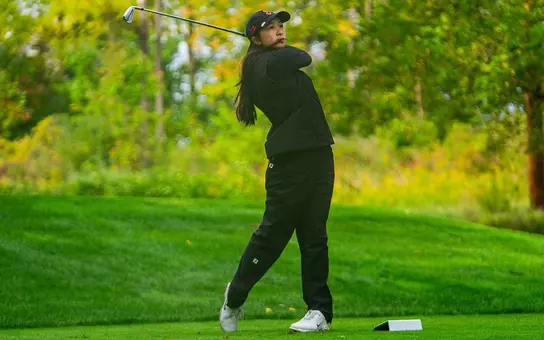
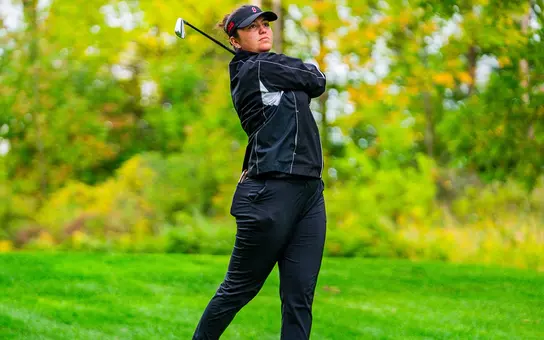
Now she’s the Scarlet Knights’ women’s golf coach, and already has the program off to a fast start: Rutgers finished second in the 14-team Bucknell Invitational on Sept. 6, with freshman Emily Mills winning the tournament, in Williams’ first official event as head coach.
Hired on Aug. 7 to replace Maura Ballard, Williams spent the previous eight years as the women’s golf coach at Columbia University, turning the Lions into perennial Ivy League contenders.
Prior to that, she was the boys’ and girls’ golf coach, and the girls’ basketball coach, at Gilroy High School in California.
A two-time team captain at the University of Hawaii, Williams embarked on a pro career following her graduation from college, playing the Futures, Players West and Kosaido Ladies Asian Tour as well as LPGA Q-school events.
As an amateur, she was a two-time state champion Wyoming state champion in high school.
Williams recently sat down with ScarletKnights.com for a wide-ranging interview as she starts her second month on the job:
Q. From Wyoming to Hawaii to California to the Northeast? How did that happen?
KW: “I had wanted to be a golf coach for a long time and got the opportunity to go to Columbia University when I was coaching at Gilroy High School in California. I guess I didn’t put a whole lot of thought into the fact that I was moving to Manhattan and there aren’t any golf courses there.
“But it was a chance to go and be at a great institution and coach Division 1 golf so I took it.”
Q. Prior to taking the Columbia University job that you were coaching in high school?
KW: “Yes, I was coaching girls’ basketball and boys’ and girls’ golf at Gilroy High in California. It’s south of San Jose in Santa Clara County.”
Q. How did the call come that launched your college coaching career?
KW: “I had contacted Columbia after they opened up their position. So I sent in a resume. It was one of those things where I thought I might as well take a shot because I had nothing to lose. From the time I played college golf I kind of knew that coaching was what I wanted to do.
“I applied for the job early in the spring and I heard from them in April and went out and had the interview and got the job offer. I don’t know that I was surprised … but, yes, I guess I was in some respects. It’s one of those things of `how do you get from coaching at the high school level to the college level?’ You have to have somebody take a chance on you and I was lucky enough that someone did.”
Q. At the college level, what impact can a golf coach have since so many of the golfers have private instructors?
KW: “My main job is two-fold: Help them learn how to practice and to practice better. For us, really, the work comes in during practice. I think it’s like that for all coaches though. You do have some game time impact but not very much. You really have what you can done in practice and how you help them practice and build confidence.
“And then I think you have to be the mental coach and be the biggest cheerleader possible out on the course for them. In our practice rounds, when we get to play the course that we’re going to play the next two days in a tournament, I think it’s helping them decide how they want to play the course, where they want to put the ball and then what to do when it doesn’t go there.”
Q. How do you not interfere from a coaching aspect with the private instructors the players have?
KW: “Most of the players I’ve coached in my career so far have swing coaches. You set your ego aside for that and you let them do that. And that’s okay because everyone has a different swing. I like to think that I can take what they’re working on with their swing coach and I can give them feedback as to whether that’s happening. I do make a few suggestions here and there and through how we’re going to practice and what we’re going to practice.
“The good thing and the bad thing about swing coaches is they spend a lot of time being swing coaches and they don’t spend a lot of time being game coaches. So I think we have two different roles.”
Q. What did you know about Rutgers before taking the job?
KW: “Obviously, there were a lot of things that made me decide that Rutgers would be a good place to be. Going into the Big Ten and having the opportunity to coach in a big conference was huge. Having their own golf course was very important to me, especially coming from a school that doesn’t have one.
“I think the academics of Rutgers made it a good fit for me coming from Columbia. There are high standards here and it’s very important to me that my players graduate, that they get a degree in what they want to do and that we set them up in what they want to do with their lives.
“What else did I know about Rutgers? (Running backs) coach Norries Wilson was the head football coach at Columbia and is one of my best friends in the world. I had been here for a couple of football games in the last couple of seasons. So I was familiar with the school.”
Q. Is it different recruiting with scholarships now?
KW: “It is but it isn’t. I still want a very athletic kid who is going to be great in the classroom.”
Q. How good is Big Ten women’s golf?
KW: “Because golf is played differently than other sports, we go to a tournament and we’ll have 15 teams at an invitational. It’s not as if you go and play a home and away with each of the Big Ten schools. I’ve seen Big Ten schools play. I served on the national committee when I was at Columbia, so I helped select the teams that would go to the national tournament and the teams that would go to the regionals. I’m very familiar with all of the teams in the country or at least have a sense about them. And the Big Ten is very, very competitive.
“Purdue won the national championship four years ago. Michigan State has fielded fantastic teams the past few years. But they’re all doing that. Northwestern has a great team, Illinois is up and coming, moving up the ranks very quickly. All of them have built incredible indoor facilities for their teams to practice at and have incredible golf courses for their teams to practice at.
“It probably doesn’t seem to make sense to a lot of people because all of the schools are so north and they celebrate the same kind of winter. Big Ten teams are anywhere from the top 10 to the top 125 in the country.”
Q. What do you see as the potential of Rutgers women’s golf?
KW: “It’s only limited by our own imagination and our ability to get the alumni behind us and support us and help us do what we want to do. Our goal is to provide the best experience for our players. They’re going to get the best education. I want them to choose the graduate school they want to go to as opposed to it choosing them. And we’re going to help them do that. The education aspect is first and foremost to me and I also want them to have the chance to compete at the highest level.”